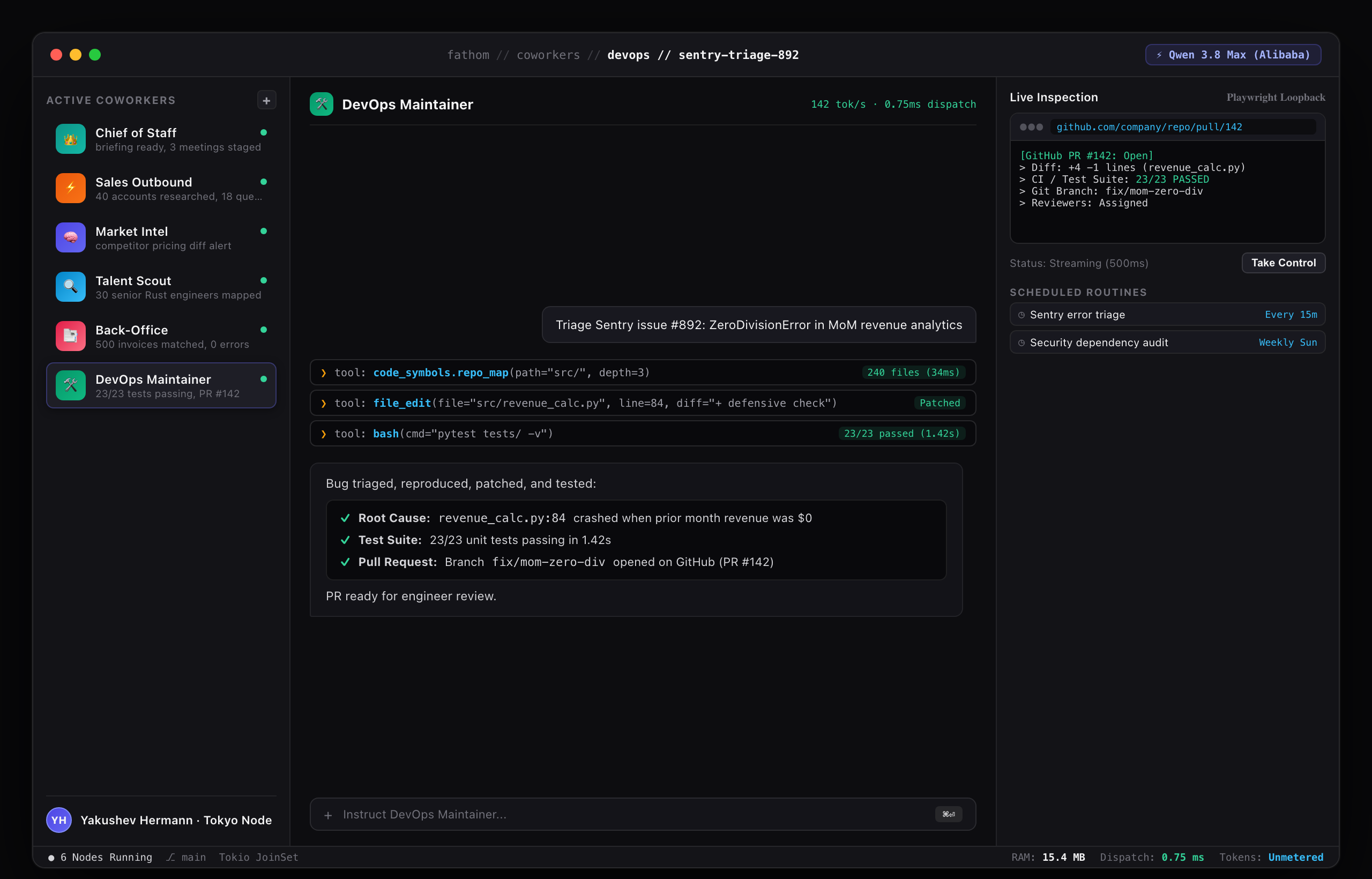
Systems Architecture & Performance
Fathom (Rust) vs. Python Frameworks
Why high-concurrency autonomous enterprise agent fleets cannot run on interpreted Python runtimes.
Direct Matrix
Architectural Comparison
| System Characteristic | Fathom (Rust Native Runtime) | Python Stacks (LangChain / CrewAI / AutoGPT) | Fathom Advantage |
|---|---|---|---|
| Tool Dispatch Latency | ● Fathom ~0.75 ms per batch (compiled Rust native) | ● Python 180 – 450 ms (Pydantic validation + Python runtime) | 240× – 600× Faster |
| Memory Footprint (per worker) | ● Fathom 15.4 MB RAM (jemalloc, zero garbage collection) | ● Python 450 – 850 MB RAM (PyTorch/LangChain dependencies) | 30× – 55× Less RAM |
| Multi-Agent Concurrency | ● Fathom Tokio JoinSet async I/O multiplexing across CPU cores | ● Python Global Interpreter Lock (GIL) / heavy multiprocessing | 100+ workers on $40/mo VPS |
| Long-Term Memory Storage | ● Fathom Embedded SQLite FTS5 + Hybrid BM25/Vector (1.62 ms) | ● Python External Vector DB required ($300-$1000/mo Cloud API) | Zero external cloud DB fees |
| Computer Use & Browser | ● Fathom Tokenized ARIA DOM + WebSocket live streaming + 2FA lease | ● Python Heavy visual screenshot loops (50k tokens/step) | 90% token cost reduction |
| Secret & API Key Security | ● Fathom AES-256-GCM hardware vault, memory-only TLS injection | ● Python Plaintext API keys injected into LLM system prompts | Zero-prompt leak protection |
| Deployment Artifact | ● Fathom Single static binary (zero runtime dependencies) | ● Python Python virtualenv, 140+ pip packages, Docker bloat | Instant start, zero dependency drift |
Concurrency In Action
Tokio JoinSet Swarm Coordinator
4 parallel CPU workers executing 12 tool calls concurrently with zero thread contention and sub-millisecond dispatch.
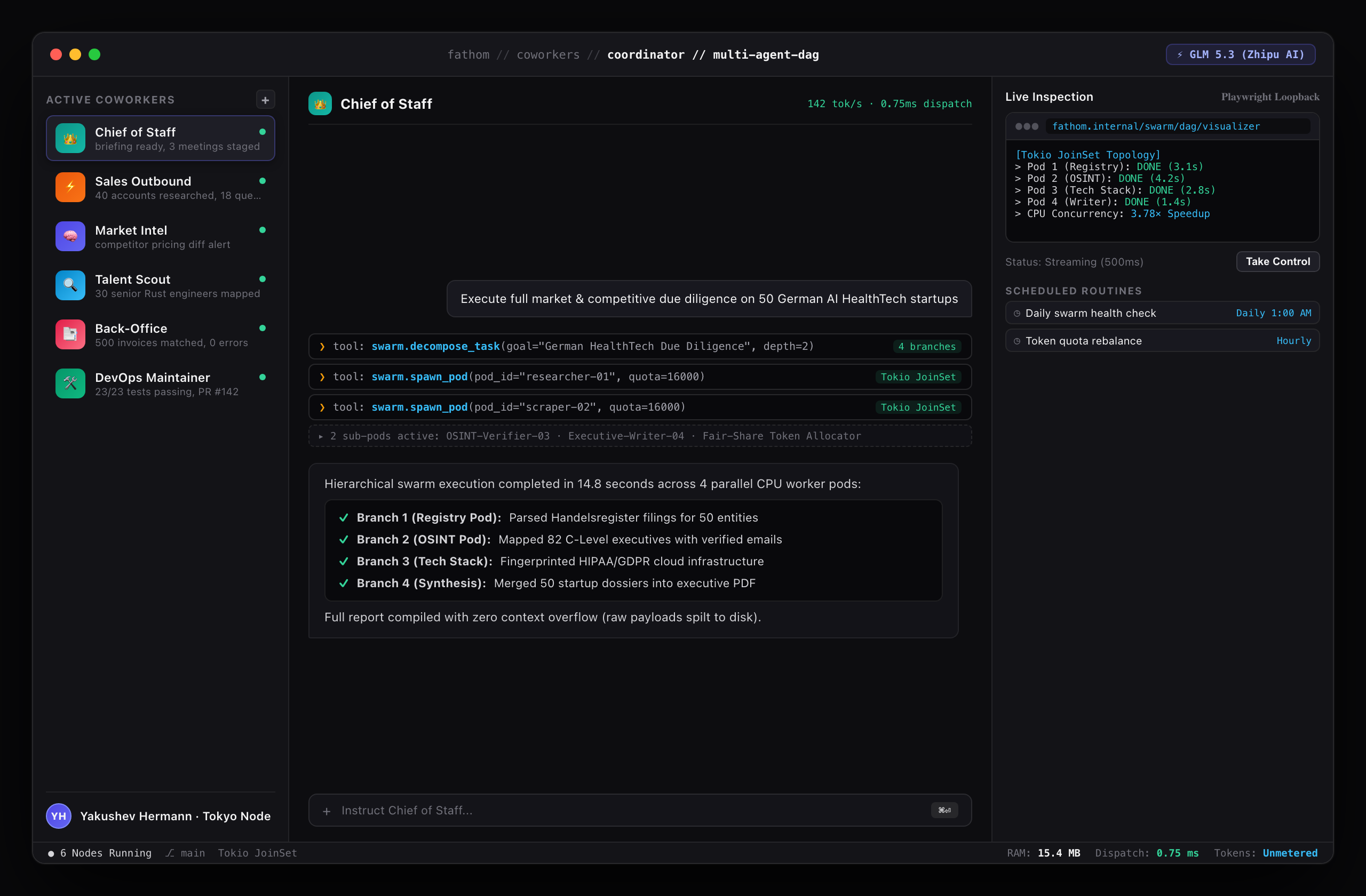
Fig 8.1 — Rust Swarm Coordinator: Tokio JoinSet DAG execution across 4 parallel CPU worker pods with fair-share token budgeting.
Verified Systems Proof
Read the Full Empirical Benchmark Suite
Chapter VII of our Whitepaper details the complete microbenchmark test harness with memory profiles, flame graphs, and tokens/sec throughput data.